General contractor.
Comprehensive service for construction investments.
As a General Contractor, we are responsible for the entire process of construction of an investment project from design to commissioning.
What benefits will you get from using our services?
As part of general contracting, we enter into agreements with subcontractors and suppliers who perform specific tasks on the project. We are the ones who commit to selecting the right professionals and monitoring their work.
We assume a significant portion of the risk and responsibility for the correct execution of the project, meeting deadlines and the quality and safety of the work. We are the ones who bear the consequences of any delays or shortcomings.
The general contracting model often includes construction, as well as installation, electrical and other specialized work which enables you as the Investor to benefit from a comprehensive offer without having to contend with many different subcontractors.
We are the main point of contact, which shortens the decision chain and facilitates communication.
These are the distinguishing features of a comprehensive investment service. You as the Investor minimize the risk and effort of managing various subcontractors and suppliers. You save time and budget.
In such projects, a variety of disciplines are combined – architecture, construction, electrical, sanitary, ventilation, air conditioning installations, as well as other elements necessary to create a complete building facility.
A major challenge is the coordination between the various trades.
Author supervision is carried out by the architectural or engineering designer who was responsible for creating the project. Its purpose is to ensure that the project is carried out in accordance with the author’s intentions and objectives.
Author’s supervision includes monitoring the construction work for compliance with the design, ensuring the quality of workmanship and resolving any interpretive doubts.
Investor supervision is supervision carried out by a representative of the investor, i.e. the person or entity that finances and commissions the project.
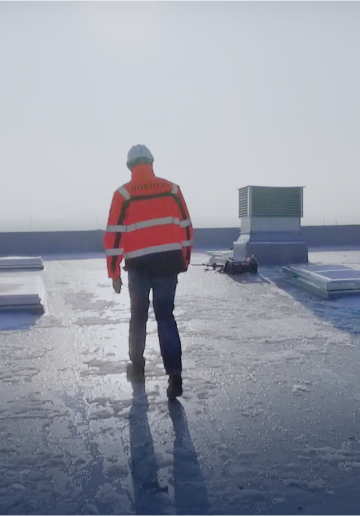
The purpose of investor supervision is to look after the interests of the Investor and to ensure that the entire construction process is in accordance with the order, schedule and quality standards. Investor supervision may include aspects:
Cooperation between author’s and investor’s supervision is crucial to ensure comprehensive management of the construction process and to effectively resolve any problems or challenges.
Cooperation with ImerCon is structured and transparent.
As an investor, you go through clearly defined stages:
Yes. ImerCon can prepare the concept and complete design documentation from the very beginning of the investment process.
This makes it possible to align the building with the investor’s business goals, technical requirements and budget assumptions.
Yes. If a project has run into problems, ImerCon can analyse its current status, verify the documentation and prepare a plan for further implementation.
This helps the investor regain control over the schedule, budget and quality of the works.
Yes. ImerCon supports investors at the preparation stage, including plot analysis, concept development, budget planning and verification of project assumptions.
Early consulting helps reduce risk and avoid costly decisions later in the process.
Yes. ImerCon can support the investor at every stage: from initial analysis and design, through formalities and construction, to technical acceptance and handover.
This gives the investor one experienced partner responsible for coordinating the process.
Yes. ImerCon can provide consulting services independently of the full design and build process.
This is useful when an investor needs support with analysing a plot, reviewing a project, optimising costs or solving problems during construction.
ImerCon consulting helps investors make better decisions before they commit to major construction costs.
It supports budget planning, design optimisation, risk reduction and a more efficient investment process.
Yes. ImerCon can analyse existing documentation and propose optimisation of construction, material or functional solutions.
Such optimisation may reduce implementation costs, shorten the schedule or improve the future use of the facility.
Yes. ImerCon can support the investor when issues arise during construction, including delays, technical problems, documentation gaps or contractor-related difficulties.
The goal is to assess the situation and define practical next steps for completing the investment.
By working with ImerCon, you gain an experienced partner who can combine consulting, design, formal coordination and construction execution.
This makes the process more predictable, easier to control and better aligned with your business needs.
If you are planning an investment, want to verify a plot, optimise a design or discuss construction execution, contact ImerCon.
We will analyse your needs and recommend the most effective way to proceed.
Building your own company headquarters starts with analysing the company’s needs, choosing the right plot and defining the investment budget. The next steps include preparing the building concept, design documentation and administrative formalities.
Your own headquarters allows you to create a space tailored to the nature of your business, gives you greater independence and becomes a lasting asset of the company.
A logistics warehouse design should take into account the type of stored goods, planned logistics flows, transport organisation and the possibility of future expansion.
Properly designed goods receiving and dispatch areas, manoeuvring yards, loading docks and efficient use of storage space are crucial.
The scope of required documents depends on the type of investment and the location of the facility. In most cases, it is necessary to prepare a construction design, obtain a building permit or submit a notification, and meet sanitary, fire safety and environmental requirements.
Properly prepared documentation helps avoid delays at the implementation stage.
The time required to build a warehouse depends on the facility’s area, construction technology, investment complexity and administrative procedures.
The overall schedule includes design, obtaining permits, construction works and technical acceptance.
Building a service building begins with defining the function of the facility, preparing the architectural concept and analysing the development potential of the plot.
Next, design documentation is prepared, required administrative decisions are obtained and construction begins. A well-designed service building should be functional, economical to maintain and tailored to the needs of its future users.
The implementation of an office building includes:
Each stage requires proper coordination to maintain the planned budget and schedule.
Your own warehouse gives the company full control over logistics processes, helps reduce rental costs and allows the facility to be tailored to individual business needs.
In addition, investing in a warehouse increases the company’s asset value and enables further business development.
Planning a company headquarters should begin with defining business goals, space requirements and the expected development of the company.
It is then worth analysing the plot, preparing an investment budget and developing an implementation schedule. A well-prepared investment process helps reduce risk, control costs and carry out construction efficiently.
When choosing a general contractor, it is worth paying attention to experience in similar projects, client references, team competence and the scope of services offered.
A good general contractor should provide not only construction execution, but also support in design, budget planning and coordination of the entire investment process.
The cost of building a warehouse hall depends on many factors, such as the facility’s area, construction technology, investment location, finishing standard and technical equipment.
The final budget is also affected by ground conditions, installations and site development.
The construction time for a production hall depends on the size of the investment, scope of design work, administrative procedures and the investor’s technological requirements.
The shortest implementation times are achieved with good organisation of the investment process and cooperation with an experienced general contractor.
The cost of the investment is mainly affected by the facility’s area, type of structure, ground conditions, materials used and the investor’s technological requirements.
Design solutions and the organisation of the construction process also have a significant impact on the budget.
Yes. The design and build formula helps shorten the investment timeline, reduce the risk of design errors and improve communication between all participants in the construction process.
The investor works with one partner responsible for both the design and construction of the facility.
The best way is to prepare the investment thoroughly before construction begins.
Cost analysis, design optimisation, proper schedule planning and ongoing supervision of the works are essential.
The most common mistakes include choosing a contractor based only on the lowest price, lack of a detailed schedule, underestimating the budget and skipping the design optimisation stage.
Such decisions often lead to delays and increased investment costs.
Yes. The greatest savings potential appears at the design stage.
Analysing the design documentation and optimising structural and material solutions can significantly reduce implementation costs without compromising the quality of the facility.
A general contractor takes responsibility for organising the construction site, coordinating subcontractors, managing the schedule, logistics and quality control.
This allows the investor to focus on running their business instead of being involved in day-to-day construction management.
Yes. The general contractor is responsible for organising and supervising the work performed by subcontractors.
The general contractor coordinates all trades and checks that the works comply with the design documentation and investment schedule.
Before starting an investment, it is necessary to analyse development conditions, access to technical infrastructure, ground conditions and transport access to the plot.
Proper site preparation helps avoid many problems during construction.
Yes. A profitability analysis helps determine expected costs, potential risks and the estimated return on investment.
This allows the investor to make decisions based on reliable data, not only assumptions.
The scope of formalities depends on the type of investment and the location of the facility.
In most cases, it includes obtaining administrative decisions, preparing design documentation, connection conditions and a building permit.
Yes. If problems occur with the existing contractor, it is possible to audit the investment, assess the progress of the works and prepare a plan for further implementation.
This helps regain control over the project and reduce potential losses.
The process includes investment analysis, concept preparation, design, obtaining required administrative decisions, construction works, technical acceptance and handover of the facility for use.
Each stage should be carried out according to a previously agreed schedule.
Investment profitability can be increased through design optimisation, selection of appropriate construction technologies, cost control and effective schedule management.
Reducing the risk of design and execution errors is also crucial.
A substitute investor represents the investor’s interests during a construction project.
They coordinate the activities of participants in the investment process and control the schedule, budget and quality of the works.
The substitute investor service is particularly beneficial for large or complex investments, when the investor does not have sufficient resources to supervise the construction process independently.
Steel structures are the most popular, as they allow facilities to be erected quickly and offer high design flexibility.
The choice of technology should always be adapted to the purpose of the facility and the investor’s requirements.
Combining design and construction helps eliminate many problems caused by a lack of coordination between the designer and the contractor.
This solution speeds up the investment, reduces the risk of errors and makes it easier to control costs at every stage of the project.